
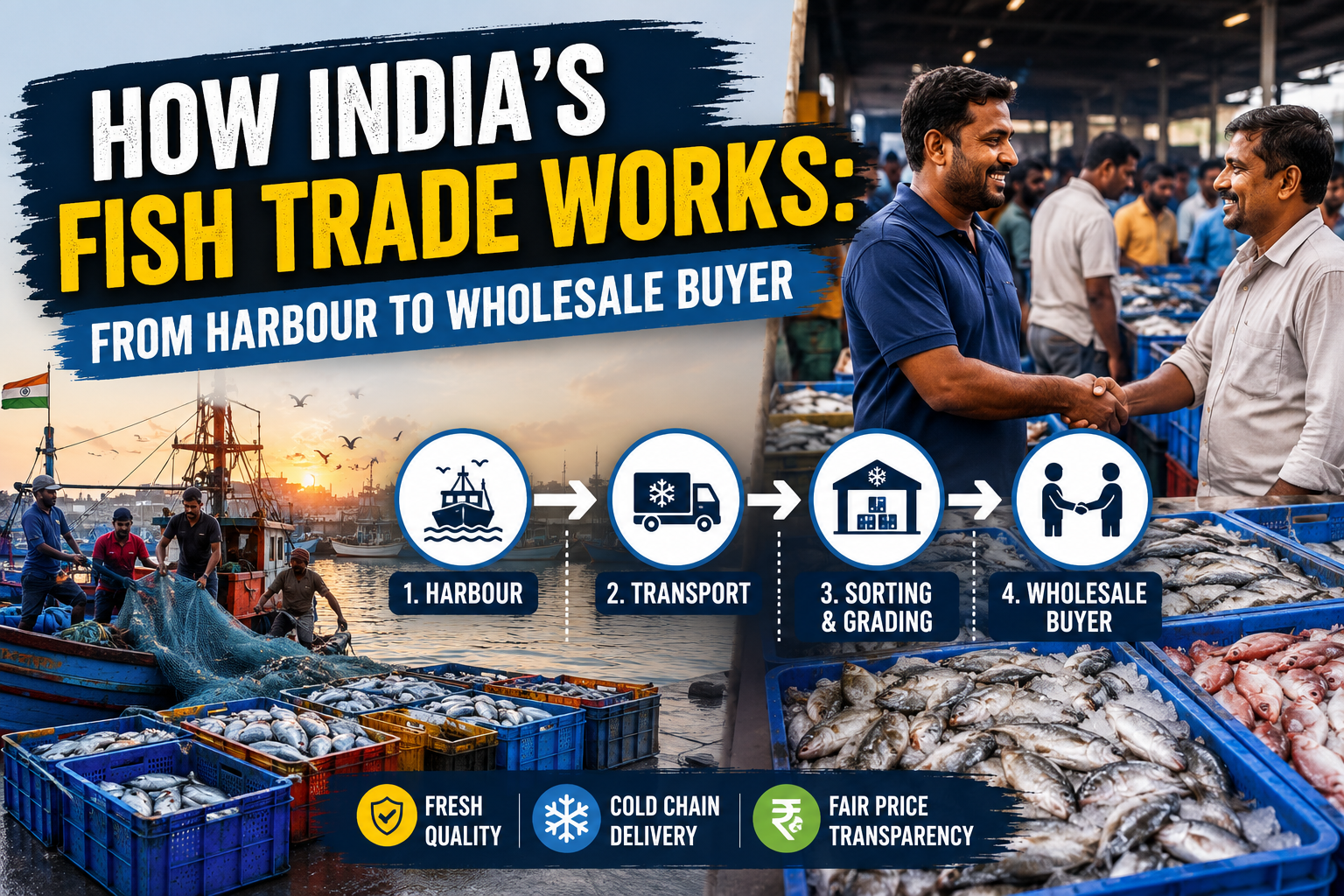
India is the world's second-largest fish producer, yet much of the trade still moves through fragmented harbour networks, informal middlemen, and paper-based records. Understanding how fish actually travels from boat to buyer is the first step toward better procurement, fairer pricing, and a more reliable supply chain.
Stage 1: Landing at the harbour
Every supply chain begins when fishing vessels return to a fish landing centre (FLC) or harbour. Trawlers, gill-netters, and traditional craft offload catch onto the quay, often before dawn. At this point, freshness is at its peak — but so is the pressure to move product quickly before quality degrades in the open air.
Landing centres are regulated under state fisheries departments. Licensed operators must record vessel arrivals, catch volumes, and species where required. However, practices vary widely between states — Odisha, Andhra Pradesh, Kerala, and Gujarat each have distinct harbour structures and auction customs.
Stage 2: Auction and first sale
At most major harbours, the first sale happens through an auction — either open outcry on the quay or through registered agents. Buyers include:
- Commission agents who buy on behalf of wholesalers, exporters, or processors
- Direct wholesalers purchasing for cold storage and redistribution
- Licensed marketplaces like BlueHarvest Exchange, which aggregate supply and apply standardised grading before onward sale
Pricing at auction reflects species, size, freshness, demand, and seasonality. Without transparent records, disputes over weight and price are common — which is why digital auction and weighing systems are gaining traction at progressive harbours.
Stage 3: Grading and quality assessment
Not all fish caught is equal. Before onward movement, professional traders grade catch by:
- Species identification and size classification
- Freshness indicators (eye clarity, gill colour, flesh firmness)
- Damage, bruising, and ice coverage
- Compliance with minimum legal size and seasonal restrictions
Institutional buyers — hotel chains, export processors, and large retailers — typically require documented grading. Licensed trading hubs invest in trained graders and, increasingly, computer-vision tools that standardise quality assessment across shifts and locations.
Stage 4: Cold chain and storage
Once purchased, fish must enter the cold chain immediately. Flake ice, refrigerated trucks, and cold storage rooms (-2°C to 4°C for most finfish) slow bacterial growth and preserve texture. Breaks in the cold chain — even 30 minutes at ambient temperature in coastal heat — materially reduce shelf life and sale value.
Wholesale hubs near harbours maintain pre-cooling rooms, blast freezers for export-grade product, and segregated storage for different species. Logistics planning at this stage determines whether Mumbai hotels receive Odisha prawns within 24 hours or whether product spoils en route.
Stage 5: Distribution to buyers
From the hub, seafood moves through layered distribution:
- Secondary wholesalers in city markets (e.g. Howrah, Crawford, Bhubaneswar)
- Processors for filleting, freezing, and value addition
- Institutional buyers — hotels, restaurants, caterers, and export houses
- Retail — fish shops and modern retail chains
Each handoff adds cost and risk. Buyers who source directly from licensed marketplaces with integrated logistics typically gain better price visibility, consistent grading, and traceability documentation.
Where licensed marketplaces fit in
Government-licensed fish trading platforms exist to bring order to this chain. Rather than replacing harbours, they sit at the critical junction between first sale and wholesale distribution — providing:
- Verified supplier onboarding and licence checks
- Transparent pricing and digital transaction records
- Standardised quality grading and cold storage
- Credit and ledger management for repeat buyers
BlueHarvest Exchange operates at this layer — connecting verified suppliers with institutional and commercial buyers through offline trading hubs today, with a full digital platform launching to extend the same standards nationwide.
The fish trade is not slow because of lack of demand. It is slow because trust, temperature, and records break down between the harbour and the buyer. Fix those three, and the whole chain accelerates.
What buyers should take away
If you procure seafood at volume — for hospitality, export, or retail — map your supply chain against these five stages. Ask your supplier where they enter the chain, how they maintain temperature, and whether they can provide grading records and traceability. The answers tell you more about reliability than any brochure.
Explore how BlueHarvest Exchange services support each stage, or contact our team to discuss supplier onboarding and buyer partnerships.