
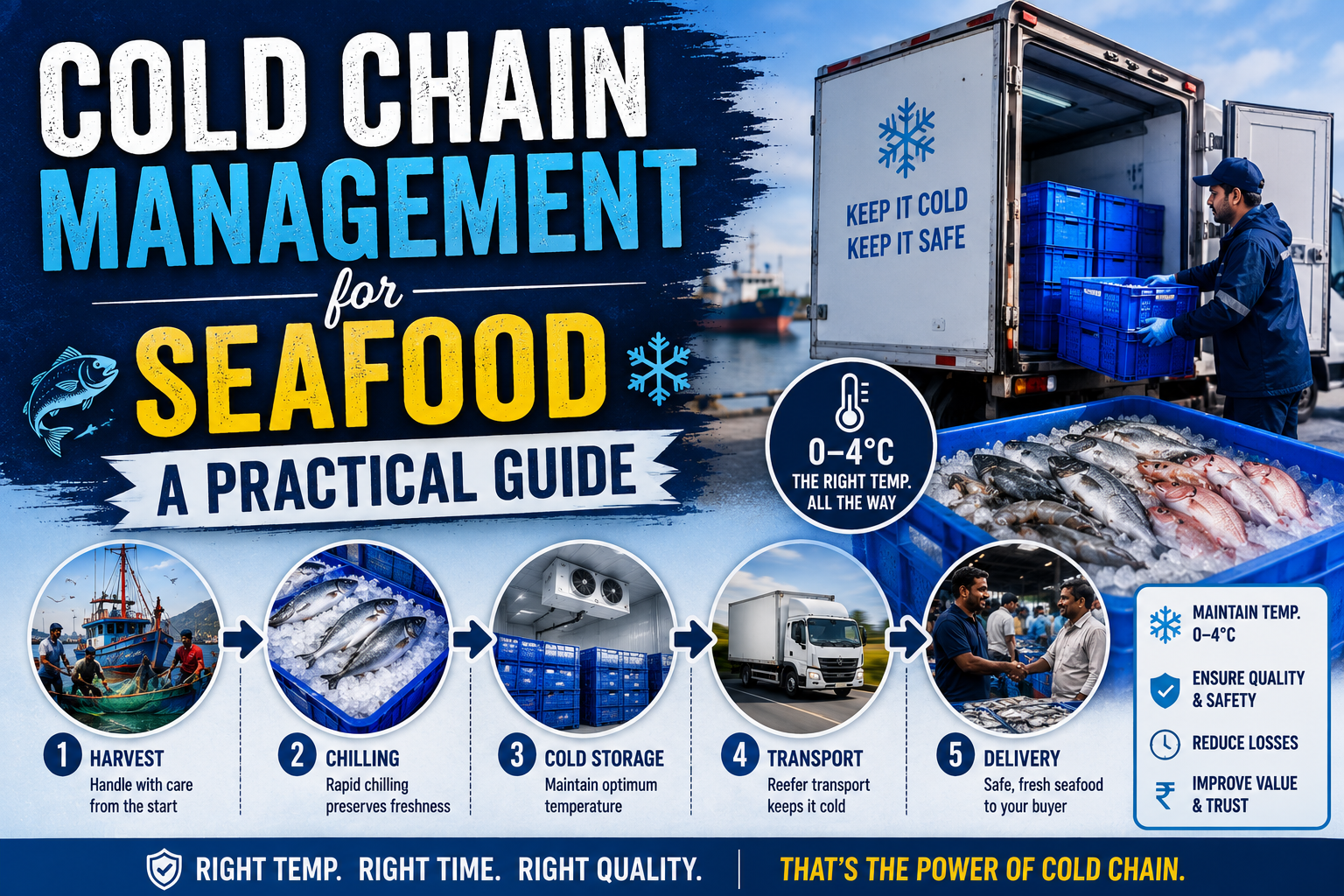
Seafood is among the most perishable commodities in global trade. In India's coastal heat, a break in the cold chain can destroy product value in hours — not days. Whether you are a hotel procurement manager, an exporter, or a harbour trader, understanding cold chain management is not optional. It is the difference between profit and waste.
What the cold chain actually means
The cold chain is the uninterrupted series of refrigerated production, storage, and distribution activities that maintain seafood within a safe temperature range. For most finfish handled fresh (not frozen), that range is 0°C to 4°C. Prawns and shrimp often require stricter control at or below 4°C from the moment of harvest.
Unlike frozen product, fresh seafood never recovers quality once it has warmed. Spoilage bacteria multiply rapidly above 5°C. Texture softens, odours develop, and histamine formation in certain species creates food safety risks that no cooking can fully eliminate.
The five critical control points
1. On-board handling
Quality is determined at sea. Vessels that use adequate ice-to-catch ratios and store species separately arrive with better shelf life. Smart trawler systems now monitor hold temperatures and catch volumes in real time, giving buyers visibility before vessels dock.
2. Harbour landing and auction
This is where most cold chain failures begin. Fish left on open quays under direct sun can rise several degrees in minutes. Best practice: immediate icing, shaded transfer areas, and maximum 30-minute exposure before entering pre-cool rooms. Licensed trading hubs enforce time limits between landing and cold storage entry.
3. Cold storage and grading
Wholesale facilities should maintain:
- Pre-cooling rooms at 0–4°C with calibrated thermometers
- Separate zones for raw and processed product
- Daily temperature logs (required for FSSAI-licensed operations)
- First-in-first-out rotation to prevent ageing stock
BlueHarvest Exchange infrastructure includes temperature-controlled storage designed for these standards — see our infrastructure overview for details.
4. Refrigerated transport
Reefer trucks must be pre-cooled before loading — not cooled after. Loading should be fast, with insulated containers and adequate ice or gel packs for last-mile delivery. GPS-enabled fleet monitoring is becoming standard for institutional contracts that require proof of temperature compliance.
5. Buyer receiving and storage
Even perfect upstream handling fails if the buyer lacks receiving discipline. Hotels and processors should:
- Check delivery temperature with a probe thermometer on arrival
- Reject product above 4°C unless pre-agreed tolerance exists
- Transfer immediately to walk-in cold storage
- Label with receive date and use within safe windows
Common failures and how to spot them
Buyers can often detect cold chain breaks without laboratory testing:
- Dulled eyes and sunken flesh — age and temperature abuse
- Ammonia or sour odour — bacterial spoilage underway
- Excess drip in packaging — freeze-thaw or temperature fluctuation
- Inconsistent texture within a batch — mixed-age or mixed-source product
Document rejections with photographs and temperature readings. Suppliers who take cold chain seriously will investigate; those who do not are telling you something about their operations.
Regulatory context in India
FSSAI licensing requires food businesses to maintain cold storage records and HACCP-based controls for seafood handling. Export to EU and US markets adds stricter traceability and temperature documentation requirements. Licensed marketplaces that serve both domestic institutional buyers and exporters must bridge these standards in daily operations.
Building a cold chain checklist
Before your next procurement cycle, ask every supplier:
- What is the maximum time from harbour landing to cold storage?
- Can you provide temperature logs for storage and transport?
- Are reefer vehicles pre-cooled and calibrated?
- What is your rejection and replacement policy on arrival?
- Do you segregate species to prevent cross-contamination?
Suppliers who answer clearly and with documentation are partners. Those who answer vaguely are risks.
BlueHarvest Exchange integrates cold chain infrastructure with verified trading — contact us to discuss logistics for your procurement needs.